Writtle Singers
     
 
o

Reviews

2010

2009

2008

2007

2006

2004

2003

2001

1999

1998

1997

1996

1995

WREVEALED
Writtle Singers Summer Concert
03.07.10

As exemplified by Harry Christophers and The Sixteen, the best kind of choral concert these days is a journey with a destination, not just pretty aural scenery. A knowledgeable guide helps, too, making sure we don't miss anything along the way.
Christine Gwynn's Writtle Singers unfailingly provide a fascinating trip, and this summer's “exploration” was one of their finest.
The idea was to look at some of the structures, colours and textures of choral music; so as not to make the route too predictable, the programme listed the composers alphabetically. Along the way we heard polyphony in mirror image from Byrd, a cheeky alehouse round, a Latin American song with just two chords and a canary to its name, an enigmatic Ave Maria from Verdi, an intricate double canon from Purcell and two wordless numbers – Bach's Familiar Air, and Christine's own ingenious eight-part arrangement of the overture to Mozart's Marriage of Figaro to end the journey. The “words”, precisely articulated, artfully suggested the colours of the original instrumentation.
The adventure began, appropriately enough, with Sumer is Icumen In, in which we could all join.

Michael Gray

^
^
^

Review of Writtle Singers performance of Mahler 2nd Symphony, Royal Festival Hall with Marin Alsop and Bournemouth Symphony Orchestra 9th May 2010

BERNSTEIN, JANACEK, PANUFNIK
Writtle Singers in Chelmsford Cathedral
27.03.10

Ancient texts, modern choral settings, though only one of the composers is still living.
She is Roxanna Panufnik, whose exquisite Westminster Mass brought the programme to a close. The extended chromatic harmonies of the Gloria, the rapid Hosannas of the Sanctus, the crescendo repetitions of the Agnus Dei, and the final peaceful resolution, all superbly realised by the Writtle Singers, made this a deeply moving experience on the eve of Holy Week. Alison Connolly was a fine soprano soloist for the Deus Meus. This was the Clifton Cathedral version, with organ [James Norrey], harp [Satu Salo] and wonderfully evocative bells [Katy Elman].
The other commission was Bernstein's much-loved Chichester Psalms. More percussion here, with a startling cymbal crash in the first bar. The powerful drums, and the mighty organ part, would have been better matched by a more unbuttoned choral approach, though I can understand why the singers would want to keep their eyes on the score or the conductor. No such concerns in the gorgeous second part, where Oliver El-Holiby's alto filled the cathedral with Bernstein's melodic line.
Christine Gwynn's challenging programme also included the unforced sincerity of Janacek's setting of the Lord's Prayer [sung in Czech], with its bold Amen, and a chance for James Norrey to put the West End organ through its paces, with Petr Eben's thrillingly martial Moto Ostinato.

Michael Gray

^
^
^

CANDLELIT CHRISTMAS CONCERT
Writtle Singers
13.12.09

The central work of Writtle Singers' seasonal offering this year was Saint-Saens' Christmas Oratorio. A typically adventurous choice, it is a setting of Biblical and liturgical Latin texts, with groups of soloists [including the lovely Benedictus sung by Alison Connolly and Peter Quintrell], and a charming organ accompaniment [David Sheppard], beginning with a Bach-style Prelude. Christine Gwynn encouraged her choir through this sometimes challenging work, resulting in an enjoyably atmospheric performance.

The all-French programme also included two familiar congregational carols, and a beautiful processional candlelit Let All Mortal Flesh Keep Silence.

Earlier in the afternoon, we heard an equally enjoyable family concert, with more European works, including the Burgundian Patapan, appropriately accompanied by drum and recorders, and El Rorro, a Mexican lullaby carol which imagines the elephant and the mosquito at the manger ! Not forgetting Away in a Manger, and, almost as well known, Little Donkey, by Eric Boswell, who died earlier this month.

And an unexpected piece of 60s nostalgia, the Joy Strings' Christmas hit, Starry Night.

Michael Gray

^
^
^

ITALIAN EVENING
Writtle Singers at All Saints' Church
07.11.09

Allegri is a one-hit wonder these days, his Miserere eclipsing the rest of his Sistine output. His Mass – Che Fa Oggi Il Mio Sole – is based on a madrigal, and since this is the Writtle Singers, they researched and sang that earlier work first.
This Mass, with its glorious Sanctus, was the climax of an Italian evening, a fascinating blend of words and music, sacred and secular, including early love songs, Verdi's setting of Dante's Pater Noster, and an enthusiastic Baroque hunting song by Caldara, which we all sang as a round.
The Verdi might have benefited from larger forces, though the closing bars were very effective. The chorus, elegant in black and gold, coped impressively with the adventurous repertoire, encouraged and inspired by their director Christine Gwynn. I particularly liked the charming simplicity of Dormono le Rose, and the evocative Sera sui Monti, one of the few modern works in the programme, with its distant bells across the valley.
Martyn Richards' readings included Miss Garnet entering San Marco, and H V Morton exploring the Pope's garden and Michelangelo's wardrobe. The extracts were absorbing and made a relevant sorbet between the musical dishes on offer. But I might have wished for a variety of voices to match the range of the readings.
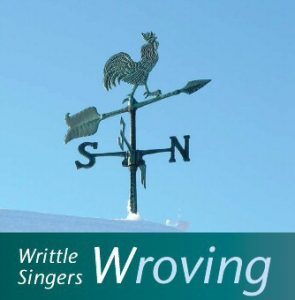
The evening also saw the launch of the Writtle Singers' third CD – Wroving – music from their travels on tour, not only in Italy, but also in France and Antwerp.

Michael Gray

^
^
^

ESSEX WINE
Writtle Singers
11.07.09

The County connection was the cement holding this concert together. As we have come to expect from Christine Gwynn and the Writtle Singers, we were educated as well as entertained.

All the music had a specific link to Essex. The choir processed to the transept with Ward Swingle's take on Henry VIII: Pastime With Good Company, recalling not so much Beaulieu as clandestine trysts with Bessie Blount at Blackmore.

More secrecy at Stondon Massey, just up the road, where William Byrd wrote his setting of the Latin Mass, first sung in the safe seclusion of Ingatestone Hall. The Singers' Gloria grew in stature towards the end, while the Credo swelled to a wonderful affirmation of faith. The mass ended with an affecting, and beautifully judged, plea for peace.

Ralph Vaughan Williams' Mass in G minor for double choir was clearly influenced by Tudor church music, and it was lovely to hear it so soon after the Byrd. Some warm tones in the Gloria and Credo especially, with impressive solo work from within the choir.

Another obvious influence was folk music, and we heard Bushes and Briars, collected early in RVW's career, in the rural backwater of Brentwood.

Michael Gray

^
^
^

GLORIANA, MONARCH AND MUSE
Writtle Singers
07.03.09

A bold fanfare, a feisty Bransle, brought the Writtle Singers up to the transept in a concert opening typical of the sense of the dramatic which informs their programming.
Christine Gwynn had devised a sequence of music to illustrate the life of the Virgin Queen, “a fruitful and rich period” artistically. Each work was introduced by a brief reading; no dry history lesson, but an exploration of byways peopled by the likes of Will Kempe and “Nosy” Parker. And, wittily, rumour and speculation about Edward de Vere were followed by Morley's Fyer, Fyer !
Contemporary works included a lovely piece by Weelkes, who also contributed the Kempe song, and Latin settings by Byrd, the great survivor of the old faith.
Britten's Gloriana was central to the concert – the mesmeric Concord, and the rhythmic men's voices in Rustics and Fishermen – and other later English voices included Purcell [The Faerie Queen] and Holst's glorious Partsongs: the beautifully sustained Dream Tryst and Come to Me, bracketing the livelier birds and glow-worms.
Christine joined accompanist Caroline Finlay for two helpings of Warlock's Capriol Suite, in its original piano duet version.
In addition to their concerts, Writtle Singers are offering a free open workshop [Byrd and Vaughan Williams] in the Church on March 30.

Michael Gray

^
^
^

Review of 'Transformations'
Saturday 8th November 2008

Old wine in new bottles?

Writtle Singers’ audience at All Saints' Church on Saturday were anticipating some surprises. The fireworks outside presaged excitements within! Innovative and enjoyable, the “Transformations” programme spoke of “music given a new life”, exploring how from the earliest days composers, instrumentalists and singers have reworked admired themes of their predecessors. And how well it delivered!

The choir, directed by Christine Gwynn, opened with the hauntingly beautiful thousand-year-old plainsong chant of Veni Creator. Its anonymous monastic composer would have been startled, and hopefully delighted, to hear the choir present the chant as a round, with an improvised accompaniment by Ken Bartels’ alto saxophone. How beautifully the wistful, reedy tone of the playing echoed and commented on the singing throughout the evening! Bach’s short chorale on the same theme, sung with feeling and precision, gave a taste of good things to come.

Through plainsong, to Palestrina and Byrd the programme led on to more modern transformations. Organist Robert Poyser delighted the audience with Marcel Dupre’s variations on an ancient vespers setting – his four movements progressively extending the original, and ending with a sparkling modern finale. Buxtehude’s complex Magnificat, with an organ figured bass showed the strength in depth of the choir, both ensemble and with nine soloists.

More surprises were to come. A delightful impromptu organ improvisation on Three Blind Mice meeting the Archers will live long in the memory. Even the audience took a share in “Transformations”, joining in with Pachelbel’s Canon, and Bach/Gounod’s glorious Ave Maria.

A concert to remember as Writtle Singers go from strength to strength.

Martyn Richards

^
^
^

Review of
AN EAST ANGLIAN CHRISTMAS DOUBLE BILL,
December 2007

CRISP winter sunshine at the start, frost and candlelight at the end.
Only a dusting of snow on the green could have brought more Christmas spirit to this splen­didly seasonal concert in All Saints' Church.
The East Anglian theme was reflected in the readings - cows in slurry, geese plucked, a fairy wand dusted with Epsom Salts and, most effective, a child's last Christmas before the war swept the old world away.
And also in the music - Vaughan Williams at Ingrave, Byrd from Ingatestone Hall, Armstrong Gibbs from Dan­bury, and Essex composer Mar­tin Taylor, whose Blow Thou Winter Wind was one of the highlights of the candlelit con­cert.
Benjamin Britten was promi­nent, of course. His Ceremony of Carols was the major work, sung with enthusiasm and style by Christine Gwynn's Writtle Singers, accompanied on the harp by Rachel Bartels, who also contributed several pieces with her flautist husband, as well as a short masterclass for the children of Writtle Junior School, who gave us Christmas songs and reminiscences of their own.
David Sheppard was the organist, Martyn Richards did most of the reading and the family concert was separated from the more formal recital by the now traditional mince pies and mulled wine.

MICHAEL GRAY

^
^
^

The Friends of Historic Essex at Ingatestone Hall
December 1st, 2007

The pure unaccompanied voices of the men and women of the Writtle Singers provided a breathtaking programme of songs and Christmas music from all periods on Saturday 1st December at Ingatestone Hall. Under the direction of Christine Gwynn, the 18 singers processed in singing the English traditional 'Wassail song' and finished with the 'Gloucestershire wassail' arranged by Ralph Vaughan Williams.
Composers from Essex played a big part in the rest of the concert. These ranged from William Byrd, the 17th composer who performed at Ingatestone Hall when it was a newish house, through Cecil Armstrong Gibbs from Danbury, to 'Cantate gloria' by Alan Bullard. He currently teaches at the Colchester Institute and has also visited Ingatestone Hall!
The programme of eighteen pieces of music were broken half way by wine and Christmas nibbles, including the traditional mince pies. The whole evening was a memorable start to the Christmas season and enjoyed by everyone.

Friends of Historic Essex website

^
^
^

Review of Like a Horse and Carriage: February 2007


The Writtle Singers are available for weddings. As a sampler, perhaps, they presented a varied programme of music about Love and Marriage, including a fun arrangement of the Jimmy van Heusen song that gave the evening its title. 
Arrangements by the choir’s musical director Christine Gwynn framed the evening. 
They began with a doo-wah version of Mozart’s Figaro overture, and ended with an even more fiendish Mendelssohn Wedding March. Both hugely enjoyable, and performed with verve and skill. 
Here Comes the Bride was there, too, not only with the proper words but in German, to boot – many of the works were given, laudably, in their original language. 
Other delights included Donizetti’s Wedding Chorus, a precise but moving piece by Wilbye, the sinuous sonorities of Faure’s Madrigal, and Walton’s moving Set Me as a Seal, with Alison Connolly and Peter Quintrell as soloists. 
The music was leavened by wry words on love, including Dorothy Parker’s delicious Bohemia. 
This inspired evening was typical of the Writtle Singers’ offer. Interesting music, intelligently programmed, enthusiastically sung. 
Michael Gray, Chelmsford Weekly News

^
^
^

Review of Spanish & American Concert: July 2006

This programme of Spanish and American music from 16th–20th century was all that we have come to expect from the Writtle Singers - imaginative, innovative and varied, with a mixture of the familiar and the unfamiliar, providing something for everyone in the sizeable and appreciative audience present in All Saints’ Church, Writtle.
The first half contained the more eclectic and less well-known items, comprising an interesting selection of music set mainly to Spanish and Portuguese texts, attractively and informally introduced by Christine Gwynn, the Writtle Singers’ talented Director. The choir, a well disciplined group, singing with excellent ensemble awareness and sensitively balanced tone, coped well with the unfamiliar languages. It was particularly good to hear the Alto section being given opportunity to shine. There were a few moments of harmonic indecision in one or two of the opening chordal passages and a tendency for falling semitones at phrase ends to flatten in pitch but for the most part, the choir captured the sultry Spanish atmosphere along with the distinctive rhythmic vitality necessary for this groups of songs. Particularly attractive was ‘O vos omnes’ by Pablo Casals, in which carefully balanced section work produced the monastic quality of sound intended by the composer.
By far the most challenging and exciting piece was Ramirez’ ‘Missa Criolla’, a Spanish folk-mass in which the choir was ably supported by piano, guitar, percussion and bass. The complex rhythms and interweaving melodic lines were generally very well managed, barring one or two uncertain ensemble passages, and the performance was enhanced by some highly polished and beautifully rendered solo and duet passages by members from each section.
The content of the second half placed the audience in more familiar territory, with songs from some of the best known American song-writers, such as Cole Porter and Duke Ellington. Particularly effective was a moving arrangement, by Martin Pickard of Cole Porter’s ‘Miss Otis Regrets’ as was the less familiar ‘The Monk and his cat’ from Samuel Barber’s collection of Hermit Songs.
It was good to see the choir visibly relax in this half. They obviously enjoy singing together and convey a real sense of their own enjoyment to the audience.
This pleasurable and entertaining evening was further enhanced by the inclusion of appropriately chosen items on the organ and the piano by Edward Wellman and Christine Gwynn. Edward also provided a skilful and sensitive accompaniment to the songs.
MJSmith

^
^
^

Chelmsford Weekly News May 2004:

".....It was back to St John's, Moulsham Street for the lunchtime concert by the Writtle Singers on May 11.  A choir of excellent discipline, diction and phraseology with, on this occasion, a Parisian twist.  Conductor Christine Gwynn produced a well-balanced harmony from the choir and I particularly liked their treatment of Faure's Madrigal."

^
^
^

Essex Chronicle 11th December 2003


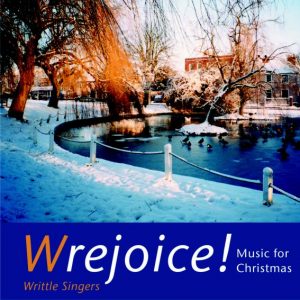
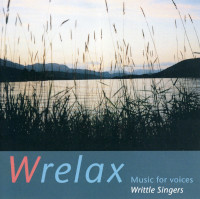
Time to Wrelax and Wrejoice

Since Christine Gwynn took over the Writtle Singers, they have gone from strength to strength. Confirmation of this is contained on two CDs – Wrelax Music for Voices and Wrejoice! Music for Christmas – out now.
The choir, which currently has 30 members, meets on Mondays from 8pm to 9.45pm in Writtle Church. Some of its members travel from far-flung parts of Essex and, as in all their concerts, solos on the CDs are taken by choir members.
They sing four concerts a year, some of which are with an orchestra. Recent works performed by the Singers include Schubert’s Mass in G, Norman Caplin’s Missa Omnium Sanctorum and Langlais’ Messe Solonelle.
On the Wrejoice! CD, you can hear a compilation of more than 20 carols old and new. These include Zither Carol, Ding Dong ! Merrily on High, Sussex Carol and Christmastide.
Andy Smith was the recording engineer, and Marianne Quintrell on flute joined the Singers for three items. Caroline Finlay was the pianist when the recording was made at the Priory Church of St. Laurence, Blackmore.
The general atmosphere on the recording is a gentle, almost pastoral feeling of seasonal music, which avoids the clichéd and the ordinary.
The CD costs £10 from Bluebells Florists, The Green, Writtle or you can call 01245-256963 or email writtlesingers@hotmail.com which are also the avenues for prospective members to contact the Singers.
Coming up: on December 14, at All Saint’s Church, Writtle, at 5.30pm you can hear the Writtle Singers live together with the Writtle Junior School Choir, when the CD should be on sale too.
Next year, the Singers will be going on their first continental tour, to Antwerp, where they will perform High Mass in the seven-aisled cathedral, plus a concert in St Paul’s Church and to Vlissingen for a concert in St Jacob’s Church.
On March 4, 2004 they perform in a combined concert with the Valentine Singers at Barnardo’s Church, Barkingside.

Mary Redman

^
^
^

Singin’ in the rain – Metfield 14th July 2001


On Saturday 14th July a number of Singers, together with some family members and friends, travelled by coach and car to Metfield on the Norfolk/Suffolk border. We had been invited by Beryl & Mike Martin to give a concert in the barn at their farm to raise funds for ‘Montgomerie Heights’ and Aids orphanage in Zimbabwe.
We left Writtle in a thunderstorm and drove through torrential rain to Scole, where we had an excellent lunch at the historic ‘Scole Inn’. Feeling suitably refreshed we continued our journey to Rookery Farm arriving there mid-afternoon. After a short warm-up and rehearsal we sang before an invited audience in the large barn. The programme consisted of the ‘lighter’ items from our Summer concert
‘A breath of Fresh Air’, that we had performed in Writtle the previous weekend. By the time the concert had finished the sky had cleared and we were able to picnic in the delightful moated grounds in glorious sunshine. A thoroughly enjoyable day was made even more rewarding by the fact that we had helped to raise over £500 for a very worthy cause.

PB

^
^
^

Chelmsford Weekly News 5th April 2001
A taste of France

An authentic French flavour to the Writtle Singers’ Spring concert – a full bodied vin rouge in the interval and a packed programme of chanson, sacred works and piano duets.
Of the choral works, I especially enjoyed Saint Saens’ Calme de Nuits – a demanding work, beautifully enunciated and charmingly atmospheric. Here, as elsewhere, one could have wished for a richer sound, but Christine Gwynn directs with firm musicality and exhorts this ever-improving group to new heights. 
Another discovery was Ravel’s Birds of Paradise, written during the Great War, which had telling solo passages from Joanne Webber and Matthew Butt.
These two choir members also sang sets of their own, as did Elizabeth Tiplin, who made an excellent job of two Breton folk songs.
The church music included Panis Angelicus and Faure’s sublime Cantique de Jean Racine. Christine Gwynn joined Lilian Bailey at the piano for two popular Suites for four hands, Debussy’s Petite and Faure’s Dolly.
French is not the easiest language to sing- McCormack preferred his Gounod in Italian – and it is encouraging to see a local group making such a success of this wide range of settings, from Passereau to Poulenc.

Michael Gray

^
^
^

Chelmsford Weekly News 22nd July 1999

Singers on song


In the eight months since I last heard the Writtle Singers conductor Christine Gwynn has made many changes. All of them for the better.
The tone is much more polished, the singing is generally much more alert and confident, and, although there is still a good deal more work to be done here, the diction has improved as well.
Such is the tonal improvement that listening to works such as Handel’s Zadok the Priest and Parry’s I was glad with my eyes shut I could well have believed I was listening to a choir twice the Singers’ size.
The main work was Purcell’s Dido and Aeneas, and enjoyable as it was, I only wish that Miss Gwynn had put her threat to make the choir follow the example of the soloists, and learn the words and notes by heart into action.
As Dido Jenny Haxell’s diction was the least satisfactory but her singing of When I am laid in earth was full of tragic dignity with the emotion well under control.

^
^
^

Chelmsford Weekly News March1999

My Spirit Sang all Day


My Spirit Sang all Day – Finzi’s setting of Robert Bridge – began Writtle Singers’ Spring Concert and also gave it its title.
Christine Gwynn’s direction produced a positive, open sound; the piece was sung from memory. Elgar’s setting of Psalm 29 – a late work – made an imposing end to the evening, with organ and men’s voices making an especially impressive contribution here.
The organist was John Webster, no stranger to All Saints Writtle, and he gave us three solos to complement the choral pieces: Bridge’s contemplative Adagio, a Stainer prelude, and Buxtehude’s gentle Chaconne.
The central works were German, sung here in English. Bach’s Jesus Priceless Treasure, which featured soloists from the choir’s own ranks, was sung with conviction and a good sense of structure. The ninth section, with three voices and choir, was particularly successful, as was the final chorus, a full-voiced recapitulation of the chorale, ending the work as it began with Jesu, Meine Freunde.
Schubert’s Mass in F is a simpler affair altogether, and was given with warmth and sincerity – a moving experience in the friendly acoustic of this lovely old church.

Michael Gray

^
^
^

Writtle News February- March 1999


The Writtle Singers are constantly growing and developing their skills of music making. Under the direction of Christine Gwynn opportunities have been taken to include some modern compositions and arrangements as well as more traditional ones.
Practice begins with a warm-up session that banishes the day’s stress and leaves the singers relaxed and ready to give of their best. One recent session that did not begin this way was on 21st December when most of the group went carol singing in the village. The weather was chill and sleety, but funds were being raised for charity. Relaxation came at the end of the evening with a warm glass of mulled wine and some food hosted by Rob & Clare Bennett.
The Christmas Concert with the Writtle Hand bell Ringers and the Choir of Writtle Junior School saw All Saints Church full to bursting. It is hoped that many of the audience will be there again for our forthcoming concerts when they will be able to hear how we have been spending our rehearsal evenings together.

Alastair Fiddes

^
^
^

Chelmsford Weekly News November 1998

Fluidity lacking in Writtle’s serenade


The Writtle Singers Autumn Serenade concert on Saturday consisted of music that had been carefully prepared, but for the most part lacked fluidity. That is until we reached the last item on the programme.
John Rutter’s Five Birthday Madrigals and in particular the second one Draw on Sweet Night, received performances that contained lively liquidity and were for this reviewer, the most pleasurable item of the evening.
Elsewhere I was particularly struck by James Macmillan’s mildly astringent setting of O My Luve’s like a Red, Red Rose, and the simple joy of Matyas Seiber’s East Dances for which the conductor, Christine Gwynn, joined accompanist Simon Harvey at the piano.
By not being able to afford an orchestra the odds were stacked too high against bringing off Vaughan Williams’ Serenade to Music satisfactorily. Mr Harvey did his best with the piano reduction of the score, but the singing lacked integration.
Michael Rose’s reading were clear although at times I felt his tone was too sombre to match the meaning of the words.

Peter Andrews

^
^
^

Essex Chronicle 3rd April 1998

New note for the Singers

Contemplations for Voices and Strings


What a pleasure to hear how strongly new conductor Christine Gwynn has stamped her personality on Writtle Singers’ performance.
They were brave enough to take up the challenge of an unaccompanied Josquin Ave Maria even though this exposed their insecurities. Locke’s Fantazie in D minor was a pleasant little work, but it was the unusual ‘bobbing’ effect of Lotti’s writing in Crucifixus a 8 that I loved. Monteverdi’s Beatus Vir was jolly, but would have benefited from a bit more exultation.
Mendelssohn’s Verleih Uns Frieden was notable for some passages of nicely rounded sound. They caught the atmospheric Italian and Austrian litanies with Verdi and Bruckner plus the bell-like sonority of the Russian church with Rachmaninov.
The singing was accompanied by organist Martyn Heald and instrumentalists Joanna Davies, Sue Catmur, Gavin Davies and Ann Sheffield.
It was good to hear the Singers being stretched. They still need, however, to work hard on clarity of projection, both of spoken and sung words, as they were often incomprehensible.

Mary Redman

^
^
^

Chelmsford Weekly News 19th March 1998

Inhibitions have gone for ever


The Writtle Singers do not just have a new conductor in Christine Gwynn, but have taken on a new musical look as well.
All the inhibition that produced such a tight tone that worried me when I heard them perform last July, gone out of the window, I hope for ever.
The improvement was noticeable in the very first item, Mozart’s Ave Verum Corpus, in which the long flowing phrases were handled with apparent ease and a nice warm tone.
The interesting programme has been most carefully thought out and had a purpose – to perform music to help the audience contemplate the true meaning of Lent.  It included no fewer than five settings of Ave Maria by Josquin, Victoria, Verdi, Bruckner and Rachmaninov, Faure’s Cantique de Racine, Monteverdi’s Beatus Vir and Mendelssohn’s Verleih Uns Frieden.
In the first half I was especially impressed by the precision of the dynamic contrasts in Buxtehude’s setting of the Magnificat, the slow solemn start to Lotti’s Crucifixus and the subsequent quality of the sustained tone and the warmth of the singing on Monteverdi’s imaginative setting of Beatus Vir.
After the interval the serenity of Mendelssohn’s writing was reflected in the singing while at the end of Verdi’s Ave Maria the sustained diminuendo came off brilliantly.  Seconds later at the start of the Bruckner setting of the same piece the sopranos gave us the purest tone of the whole evening.
Towards the end of the evening cellist Anne Sheffield gave a reflective account of Faure’s Elegie and the choir’s singing remained alert for the two final items, Casals O Vos Omnes and Faure’s Cantique de Jean Racine.
Much then to praise, the choir’s diction, although better, still needs some more work particularly on final consonants, but there was one blemish to the evening which could and should have been put right.
Miss Greer? introduced the items and in many cases the members of the choir read out English translations of the works they were going to sing, but this did not come off because, for the most part, the voices were not thrown sufficiently to reach the back of the church.
Remember the old theatrical adage about the deaf old man in the back row having as much right as those in the front row to hear every word of what is being said.

Peter Andrews

^
^
^

Chelmsford Weekly News 20th November 1997

‘Tour of Europe’ ends with Faure


Writtle Singers ended their tour of Europe at the church of La Madeleine in Paris for Faure’s Requiem.
Though their forces are modest, the performance conducted by Christine Gwynn, was bold and expressive, with strong support from Simon Harvey at the organ.
The Sanctus was especially effective with plenty of colour and a refreshingly positive tempo. Baritone Richard Standish, though not perhaps the ideal voice for this repertoire, brought poise and precision to his two solos.
The soprano in the Pie Jesu was Lisette Wesseling. Her pure tone has a touch of steel which gave a melancholy edge to the songs of Wolf and Ireland she sang in the first part of last Saturday’s concert.
The choir’s European offerings ranged from Greig’s Norway to Stravinsky’s Russia though I felt the most successful were the early Viadana Exsultate Justi, in a disciplined and precise reading, and the opening Cantate Domino of Pitoni, sung from memory with exemplary attack.
Simon Harvey brought us a lively Buxtehude Fugue from Denmark and a lovely Vaughan Williams Prelude on a Welsh hymn tune.

Michael Gray

^
^
^

Written of the concert 12th July 1997

Relax, John


For their summer concert Writtle Singers chose Handel’s Ode for St. Cecelia’s Day and a Greig Choral Suite for the main attractions.
The choir has a nice tone, but much more work needs to be done on its diction and I do wish conductor John Moore-Bridger could adopt a more relaxed atmosphere towards his music making.
Frankly Handel’s magnificent work sounded dull, and, unlike the other concert I’ve reviewed this week, I found a sense of involvement and commitment lacking. Soloist Matthew Butt sang pleasantly and with good diction while Felicity Wright floated high notes with e certain poise.

^
^
^

Essex Chronicle of the concert 22nd  March 1997


Intimate concert


An intimate concert by a small choir tackling some demanding works. Two of the experienced solo singers tenor Matthew Butt and contralto Elizabeth Tiplin, came from the choir while the visitors were soprano Felicity Wright and Waltham Singers bass Gerald Malton.
Accompanied by organist Alan Vening the first item was Britten’s ‘Rejoice in the Lamb, a setting of an 18th Century religious poem. Conducted by John Moore-Bridger the singers had to cope with some difficult music but were capable of producing a warm sound, most notably on the final Allelujahs, but clarity of word enunciation was a problem.
Schubert’s Rondeau in D for Four Hands played by Moore-Bridger and Vening on the piano proved to be the sort of piece that used to delight parlour audiences.
It was disappointing that the promised Kodaly work had to be postponed to a future date, but Schutz’s Praise to the Lord Jesus was substituted. This early music from his St. Matthew Passion did rather expose the choir’s lack of cohesive sound.
Haydn’s Mass in D minor followed and here the enunciation of the Latin text showed none of the Britten problems. The organ’s dramatic opening statement was followed by an equally strong Kyrie Eleison from the choir and Felicity Wright. One feature of Haydn’s music was how high in the register of both tenor and bass their parts are written. The two soloists coped very well with this, while Elizabeth Tiplin produced a nice rich contralto.
Mary Redman

^
^
^

E.W. December 12th 1996

Messiah is rewarding for Singers


Just what a rewarding work Handel’s is for both performer and listener.
Even when performed without an orchestra the rewards were amply proved when the 30-strong Writtle Singers and their conductor John Moore-Bridger performed the first part in Writtle Parish Council? on Saturday.
This was not the most joyous Messiah I have listened to, Mr Moore-Bridger opting for a more introverted but heartfelt approach and he secured some good tone and a sense of commitment from the singers that I have not previously associated with them, they always seemed at ease with his sensible, middle-of-the-road tempi.
All four soloists - Helen Butler (mezzo soprano), Elizabeth Tiplin (contralto), Matthew Butt (tenor), and Nigel Ward (bass) producing smooth singing with a fine feeling for word colouring and organist Andrew Vening’s choice of registration blended perfectly with the performance’s overall aim.
The second half was devoted to carols including a devoutly ebullient setting of
‘There is no Rose’ by the conductor, but the choral singing did not have the same degree of liveliness as in the Messiah.

^
^
^

Chelmsford Weekly News, March 21st 1996


It fell to the Writtle Singers and their conductor John Moore-Bridger to remember the victims of the Dunblane massacre by dedicating their performance in Writtle Parish Church of Durufle’s Requiem to the victims’ memory.
A work of great beauty and spirituality, the singers’ heartfelt sincerity of purpose and expressiveness of phrase bathed the performance in the most consoling of lights.
These qualities were also to be found in the singing of the soloists Helen Butler and Matthew Butt, and Neil Weston managed the fiendishly difficult organ part with consummate ease.
In such circumstances it was easier than usual to forgive the patches of raw tone in some of the louder passages.

Peter Andrews

^
^
^

Chelmsford Weekly News, December 14th 1995
Relaxed Sound


The Writtle Singers’ Christmas Concert was not without its drama as the conductor Keith Rankin was taken seriously ill, and his stand-in John Hatt only had two rehearsals with the choir.
Yet I must report that the singers sounded more relaxed, with a keener attack and more easily produced than when I last heard them in July. And the same qualities were to be found in the soloists – Helen Butler (mezzo soprano), Elizabeth Tiplin (contralto), Matthew Butt (tenor), and David Curtis (bass) in Purcell’s imposing ‘Sing unto the Lord’ and Donald Cashmore’s most pleasing ‘This Child Behold’
In both these pieces and the carols that comprised the second half, my ears were especially charmed by the open, well-shaped sounds emanating from the soprano and alto lines.

Peter Andrews

^
^
^


Click here to buy tickets for our next concert


Wroving CD

Music on tour, available at £10


Wrelax CD

Music for voices from Tallis to Elgar, available at £10


Writtle singers Christmas CD

Writtle Singers' Christmas CD is available priced £10. Please email for details


Writtle Singers

Writtle Singers on MySpace

Follow
Writtle Singers on our BLOG and send us your feedback


| HOME | SINGERS LOGIN | CONTACT US|